Artificial Turf Maintenance: What Atlanta Homeowners Need to Know
One of the biggest advantages of artificial turf is how little it asks of you. No mowing, no fertilizing, no irrigation, no seasonal treatments. But artificial turf maintenanceis not zero. A few simple habits keep your turf looking sharp and performing well for 15 to 20 years.
This page covers everything you need to know about how to maintain artificial turf in Metro Atlanta's climate. For a complete care schedule and seasonal checklist, download the full maintenance guide below.
The Basics of Artificial Turf Care
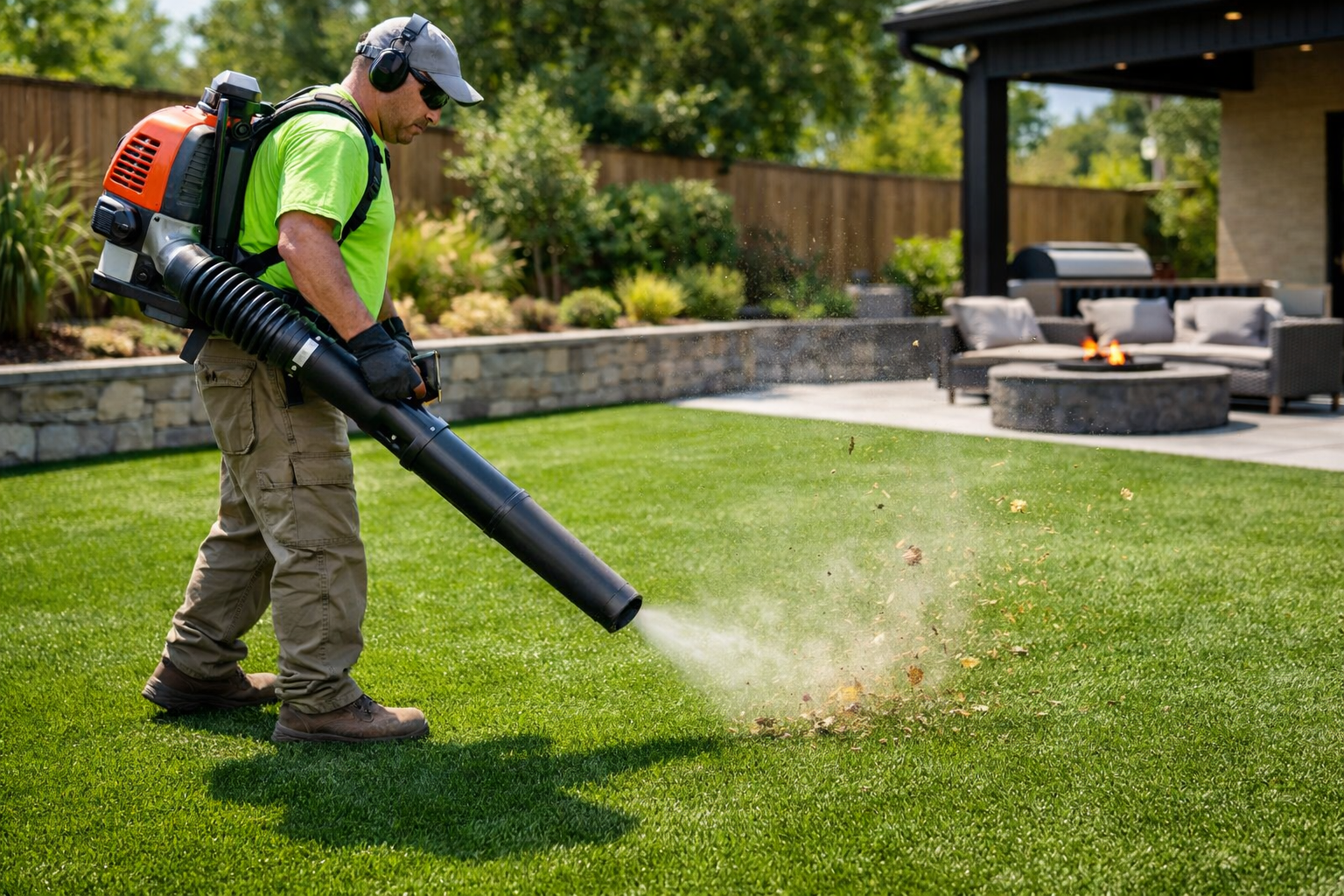
• Rinse regularly: A garden hose rinse every 2 to 4 weeks removes dust, pollen, and light debris. During Atlanta's intense pollen season, rinse more frequently from March through May.
• Brush high traffic areas: Foot traffic flattens turf blades over time. A stiff bristle brush or power broom restores blade height and keeps the surface looking full. Do this monthly in high traffic zones.
• Remove debris promptly: Leaves, sticks, and organic debris should be cleared regularly. Decomposing organic material can affect drainage if left too long.
• Check drainage: After heavy rain, verify water is draining properly. Standing water indicates a drainage issue that should be addressed early.
What to Avoid on Artificial Turf
• Cigarettes and open flames: Artificial turf fibers can melt under direct heat or open flame. Keep fire pits and grills off the turf surface.
• Sharp objects: Avoid dragging sharp objects or heavy equipment across the turf.
• Harsh chemicals: Bleach, oil based products, and harsh solvents can damage turf fibers. Use only water or enzyme based cleaners approved for synthetic turf.
• Heavy vehicles: Do not drive vehicles across residential turf. The weight compresses the base and damages drainage and blade structure.
Download the Full Prime Turf Maintenance Guide
We put together a complete care guide for every Prime Turf installation. It covers monthly and seasonal maintenance schedules, cleaning product recommendations, troubleshooting common issues, and a warranty reference summary.
Download the Prime Turf Maintenance Guide to keep as a reference for your installation.
Artificial Turf Maintenance in Atlanta's Climate
Pollen Season (March through May)
Atlanta's pollen season is one of the heaviest in the country. Rinse your turf weekly during peak season to prevent buildup.
Summer Heat
Artificial turf absorbs heat in direct sun. On peak summer days, surface temperatures can run higher than air temperature. Cooling infill products reduce surface temperature for pet areas and barefoot use. A quick hose rinse also cools the surface rapidly.
Fall Leaves
Blow or rake leaves off turf regularly through October and November. Decomposing leaves left on turf for extended periods can create moisture retention issues.
Winter and Frost
Atlanta occasionally sees frost and light ice. Artificial turf handles freezing temperatures without damage. Do not use salt or ice melt products on turf as these can degrade the fibers and infill over time.
Pet Turf Maintenance
Homes with dogs require slightly more maintenance attention. Pet turf installed by Prime Turf uses antimicrobial infill that neutralizes odors, but regular cleaning is still important.
• Solid waste removal: Remove solid waste promptly and rinse the area with water. A mild enzyme based cleaner can be used for thorough sanitation.
• Liquid waste: Our turf and base system is designed to drain liquid waste efficiently. Rinse periodically to flush residue through the drainage system.
• Odor control: A diluted white vinegar rinse or commercial enzyme cleaner eliminates odors without damaging the turf.
• Monthly deep rinse: Give the entire pet area a thorough rinse monthly to keep the antimicrobial infill performing and the surface fresh.
When to Call Prime Turf
• Seam separation: If seams between turf sections begin to lift or separate, this needs professional repair before it spreads.
• Drainage failure: Standing water after rain that does not clear within a few hours indicates a base issue that requires assessment.
• Significant infill loss: Infill replenishment restores blade density and surface performance in high use areas.
• Damage from heavy objects: Impact damage should be assessed by a professional before the area is used heavily again.
Locally Owned and Operated
Prime Turf is locally owned and operated in Metro Atlanta. We know Atlanta pollen season, Georgia red clay, and what summer heat does to outdoor surfaces because we work in it every day. Every installation we complete comes with our personal commitment to the work. If something is not right, you call the owner directly.
Serving Metro Atlanta
Prime Turf provides installation and maintenance support across Metro Atlanta including Alpharetta, Roswell, Marietta, Sandy Springs, and surrounding communities.
Questions about your turf? Contact Prime Turf and we will help you find the right solution.